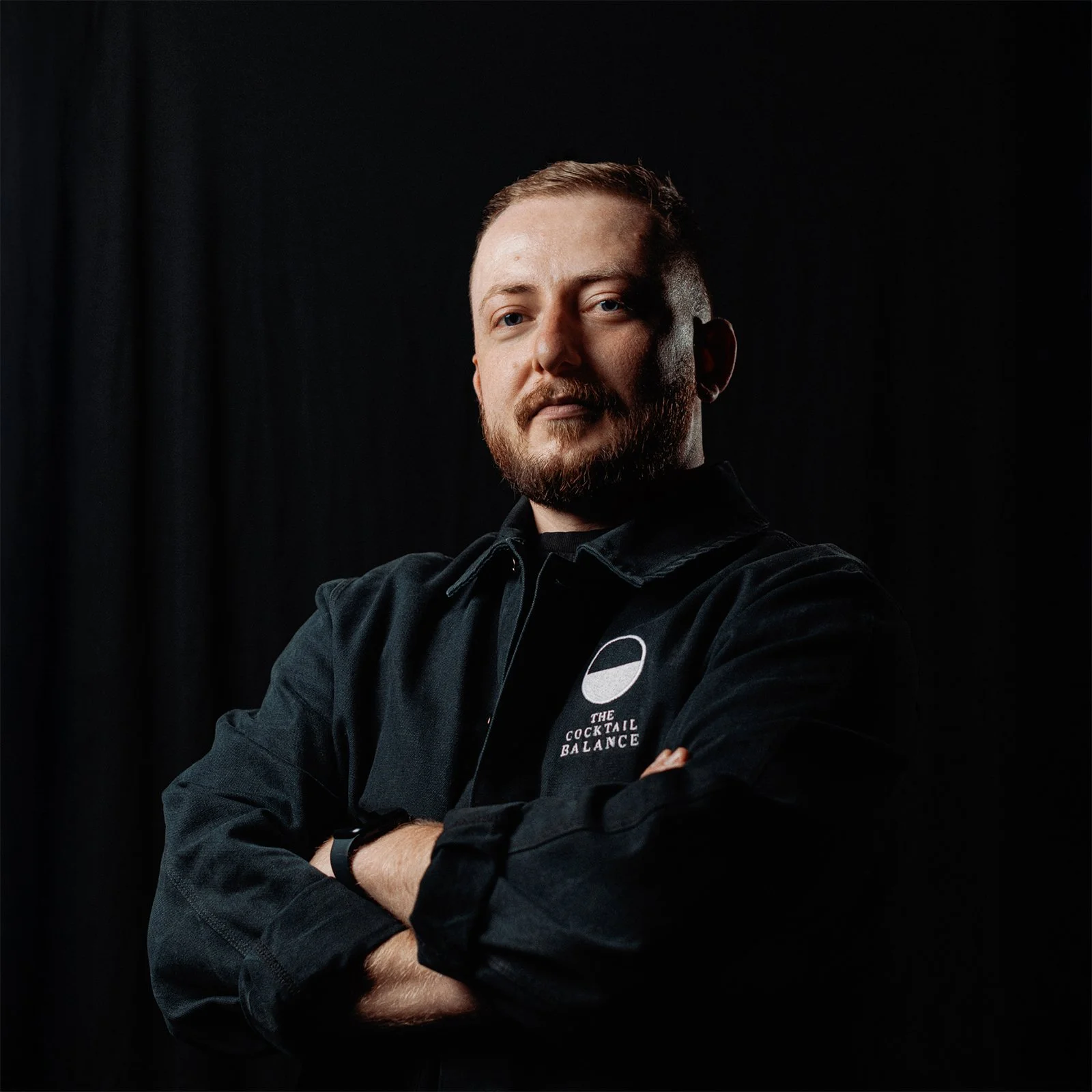
Central Europe on the Rise
While regions like North America and Asia have long enjoyed their own dedicated 50 Best Bars platforms, Europe was left waiting for its own standalone spotlight. That finally changed with the inaugural Europe’s 50 Best Bars 2026 awards in Amsterdam—a historic milestone that officially redrew the continental cocktail map. For years, the boundary-pushing bar scenes across Central Europe operated as brilliant hidden gems, respected by locals but often left out of the grand global conversation, living in the shadow of well-known bar meccas such as London, Barcelona, Paris, or Berlin. The arrival of this dedicated list changes the game completely, putting a bright international spotlight exactly where it belongs.
To understand the real weight of this moment, we met up with the teams behind three incredible venues right after the curtains closed on the ceremony: TAG from Krakow, Alma from Prague, and Bratislava’s Mirror Bar—winner of the Michter’s Art of Hospitality Award and the No. 25 Best Bar in the World. As freshly announced members of Europe's top 50, their energy was positive, outlook was incredibly optimistic, and their focus was entirely on the future. Is this recognition the promised catalyst that will permanently improve how the global industry perceives Central European hospitality?
To get a clear picture of this shifting landscape, we structured our conversation into two parts. First, we asked everyone tailored questions unique to each bar's distinct concept and point of view, and then we followed up with the same three core questions about the region's future. Here is our exclusive conversation with the visionaries who are firmly putting Central Europe on the global map.
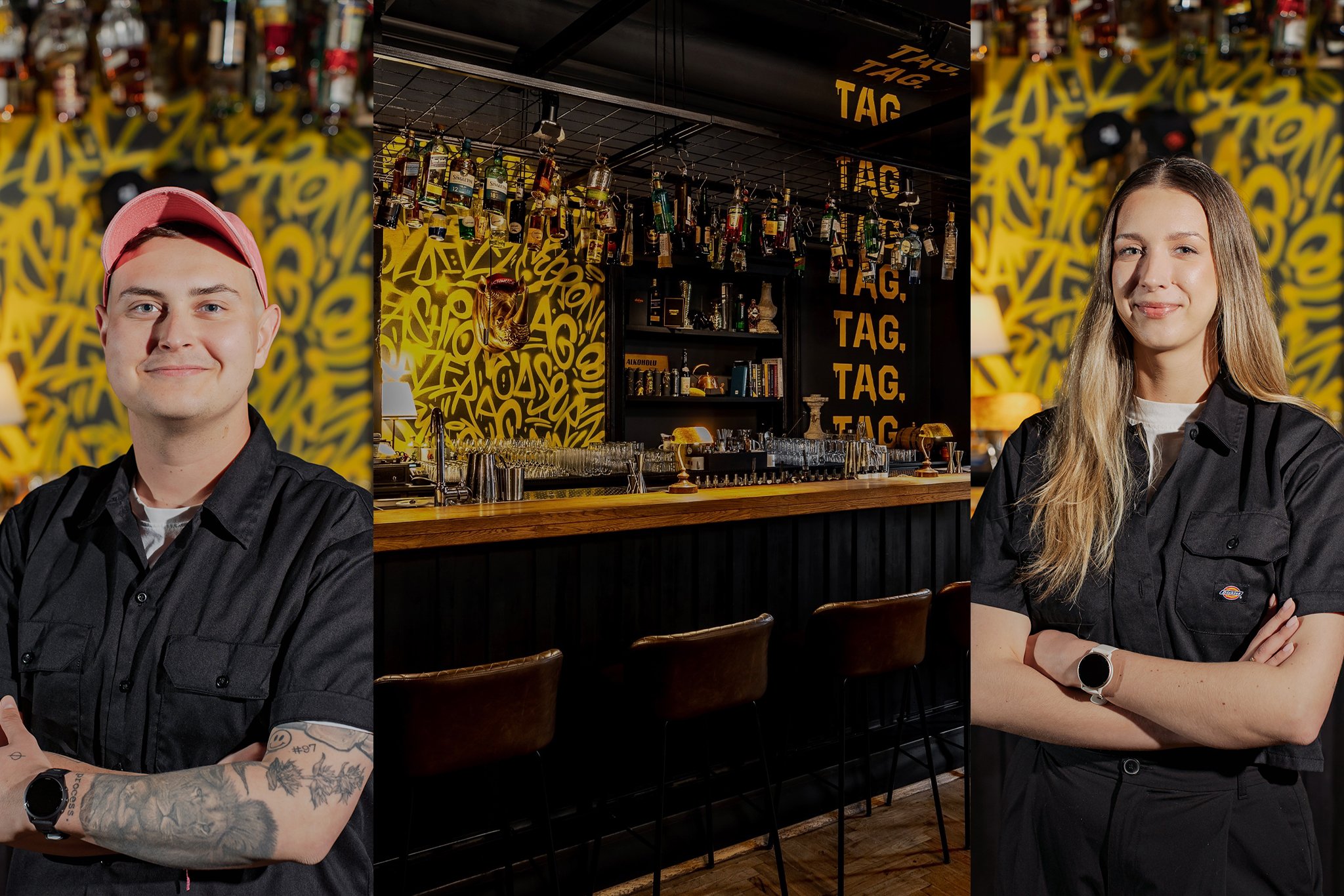
Alicja & Maciej | TAG. Krakow
Hidden in the vibrant heart of Krakow, TAG. is a masterclass in breaking the traditional rules of fine drinking. Behind this trailblazing venue are Alicja Bączyk-Mazur and Maciej Mazur, two industry powerhouses who famously put Poland on the global cocktail map by securing a spot on The World’s 50 Best Bars extended list back in 2022. The concept of TAG. thrives on brilliant, high-energy contrasts. They serve elegant, world-class classic cocktails inside a raw, graffiti-covered space, pairing loud, groovy music with an incredibly warm, welcoming style of hospitality. It’s a place designed for pure freedom—where the liquid in the glass is deeply serious, but the atmosphere is completely unpretentious.
In 2022, you made history by becoming the first Polish bar to break into The World’s 50 Best Bars extended list. Looking back, do you see this as a major turning point for Poland and a shift in how the global industry views your country's bar scene?
Alicja: Definitely a milestone for the Polish bar industry. Over the last few years, I’ve seen more and more Polish bars become connected to the international community, raising standards, sharing knowledge and showing the creativity that already exists in our market. The level of talent and ambition in Poland today is higher than ever and I’m very excited to see what it’ll become in a near future.
It’s still only the beginning of the cocktail scene in Poland, but international recognition helps to put a spotlight on what’s happening here. It gives people a reason to look closer and discover the incredible hospitality, creativity and quality that Poland has to offer. I believe the global perception of our market has changed significantly and we're only starting to see its full potential.
Your concept is built on beautiful contrasts—serving elegant, classic cocktails in a graffiti-lined space, and pairing loud, groovy music with deeply warm hospitality. Is this your definition of what a modern bar should be—a place where guests can truly let go and feel free?
Maciej: For us, a great bar is a place where people feel comfortable and welcome from the moment they walk in. It should be a space where guests can enjoy themselves on their own terms, whether they're celebrating with friends, having a date night or simply sitting at the bar and enjoying the atmosphere.
Creating that feeling of freedom and belonging for us is one of the most important parts of hospitality.
At first glance, street art, graffiti, and classic cocktails may seem like an unusual combination, but we believe those contrasts make the experience more approachable and authentic. Great cocktails don't have to be surrounded by formality. We want to make cocktail culture accessible without compromising quality. An unpretentious atmosphere, warm hospitality, groovy music and hopefully some memorable drinks - that's what defines TAG.
You recently joined the organizing team for the Better Bar Show. How crucial do you think these types of industry events are for putting a spotlight on our regional scene and driving international gastro-tourism?
Alicja: I believe events like Better Bar Show are incredibly important, because they create opportunities for people to connect and learn from each another. They bring international attention to the region and give local bartenders a chance to showcase their work to some of the legends in our industry.
It’s also have a very real impact beyond the bar industry itself. When people travel to these kind of events, they experience the local hospitality scene such as restaurants, hotels, bars which can help to create a reason to return in the future. My hope is that events like Better Bar Show continue to position Central Europe as one of the most exciting and dynamic hospitality regions in Europe.
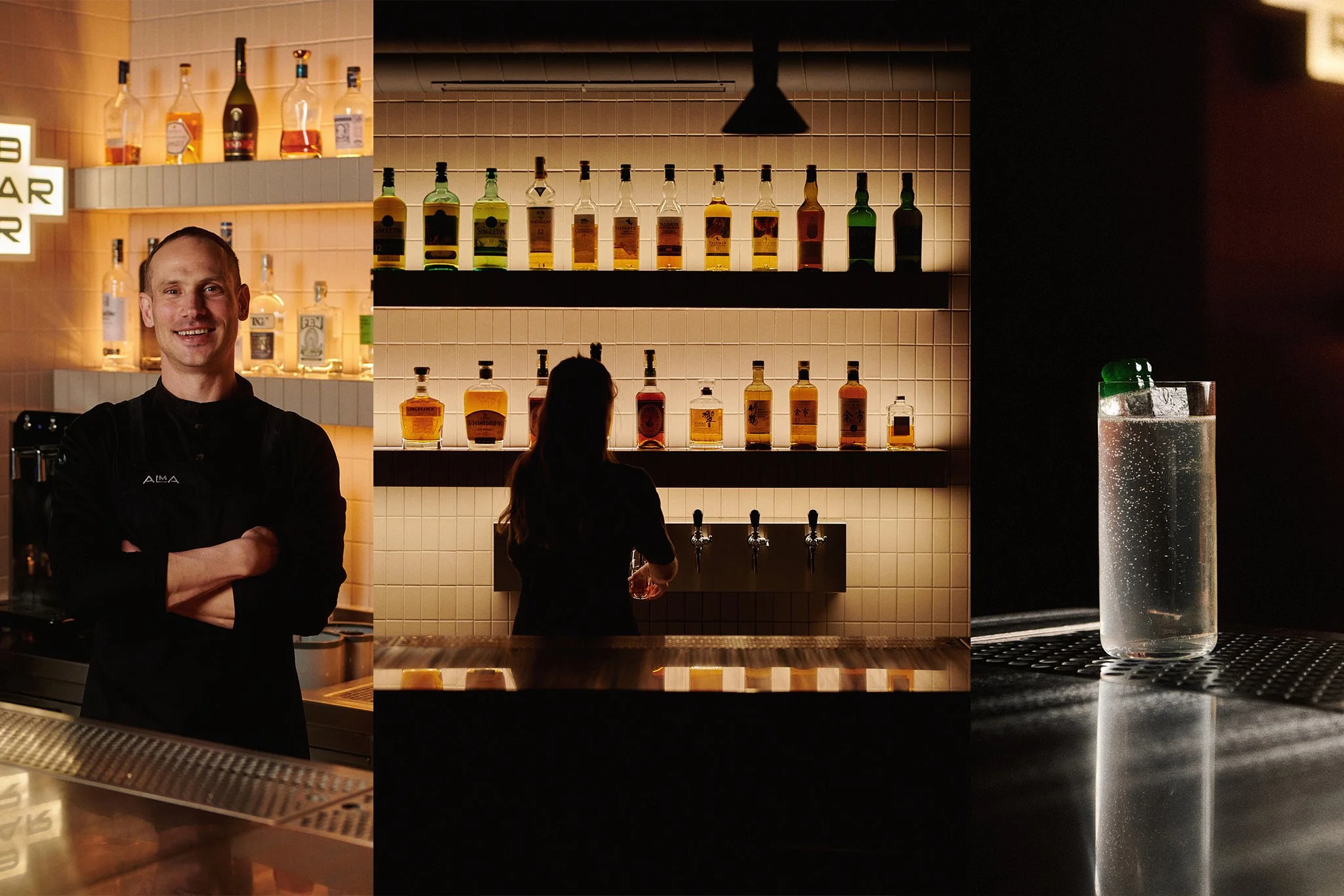
Pavel | Alma Prague
Tucked away just behind Prague's National Theatre, Alma is an absolute powerhouse of modern hospitality. Born as the next ambitious chapter from the team behind the city's beloved Kro Kitchen group (founded by Vojtěch Václavík), Alma breathes new life into a massive, historic former interwar cinema. At the helm of the liquid program is Bar Director Pavel Sochor, who—alongside his partner Matouš Boček—has built a bar that rapidly earned its place on the prestigious 50 Best Discovery list before breaking onto the grand European stage.
Alma isn't just a place to grab a drink; it’s a living, breathing multi-concept hub spanning a restaurant, a specialty café, a wine bar, and an on-site fermentation lab. The cocktail program thrives on a strict field-to-glass, zero-waste philosophy. Pavel and his team work hand-in-hand with the kitchen, foraging local ingredients and using advanced lab techniques to create avant-garde, deeply sustainable flavors.
With recognition from the Michelin Guide, Gault&Millau, Spirited Awards and the 50 Best Discovery list, Alma is firmly on the global industry map. How have these major accolades shaped your guests? Have they helped you foster a deeper connection with the local community, or do they primarily act as a magnet for international travelers?
Pavel: It definitely put us on the map with the local community, and more importantly, it gave us a real voice to help shape our own scene. What I love most about that influence is how it allows us to change the culture. For a long time, there was this old-school mindset of intense competition between bars in the city, but we don't play that game. We want to use our platform to push everyone to move forward together and grow together. At the same time, there’s no denying that these accolades—especially the Michelin Guide and 50 Best—act as a massive magnet for international travelers. It gives global guests instant trust in what we’re doing before they even step through the door.
Alma is widely celebrated as a hybrid venue—seamlessly blending a Michelin-level restaurant, an exceptional wine bar, a specialty coffee spot, and now, one of Europe’s top bars. Do you think these complex, multi-concept spaces (similar to venues like Moebius in Milan) represent the true future of hospitality, moving away from spots dedicated strictly to just eating or drinking?
Pavel: I don’t necessarily think it’s the only future for hospitality, or that the industry is completely moving away from traditional spots dedicated strictly to just eating or drinking. There will always be a beautiful, necessary place for those single-focused venues. However, what a hybrid concept does is give you a massive reach. It allows you to catch a much wider, more diverse crowd throughout the entire day, which naturally amplifies the buzz around the brand. That’s exactly why people might be talking about spaces like ours a lot more than more singular, traditional concepts.
Your bar is highly regarded for its commitment to sustainability, foraging, and a strong ecological ethos. Do you view this as the definitive blueprint for the next generation of bartending—proving that a world-class hospitality space can actively support local nature while drastically minimizing its environmental footprint?
Pavel: We completely support this philosophy, and I truly believe it can achieve everything we just talked about—protecting our local ecosystems while still running a world-class venue. Looking ahead, I’m convinced that the most successful bars of the future will be the ones that shift toward working almost exclusively with local ingredients and keep this exact ethos at the absolute core of everything they do.
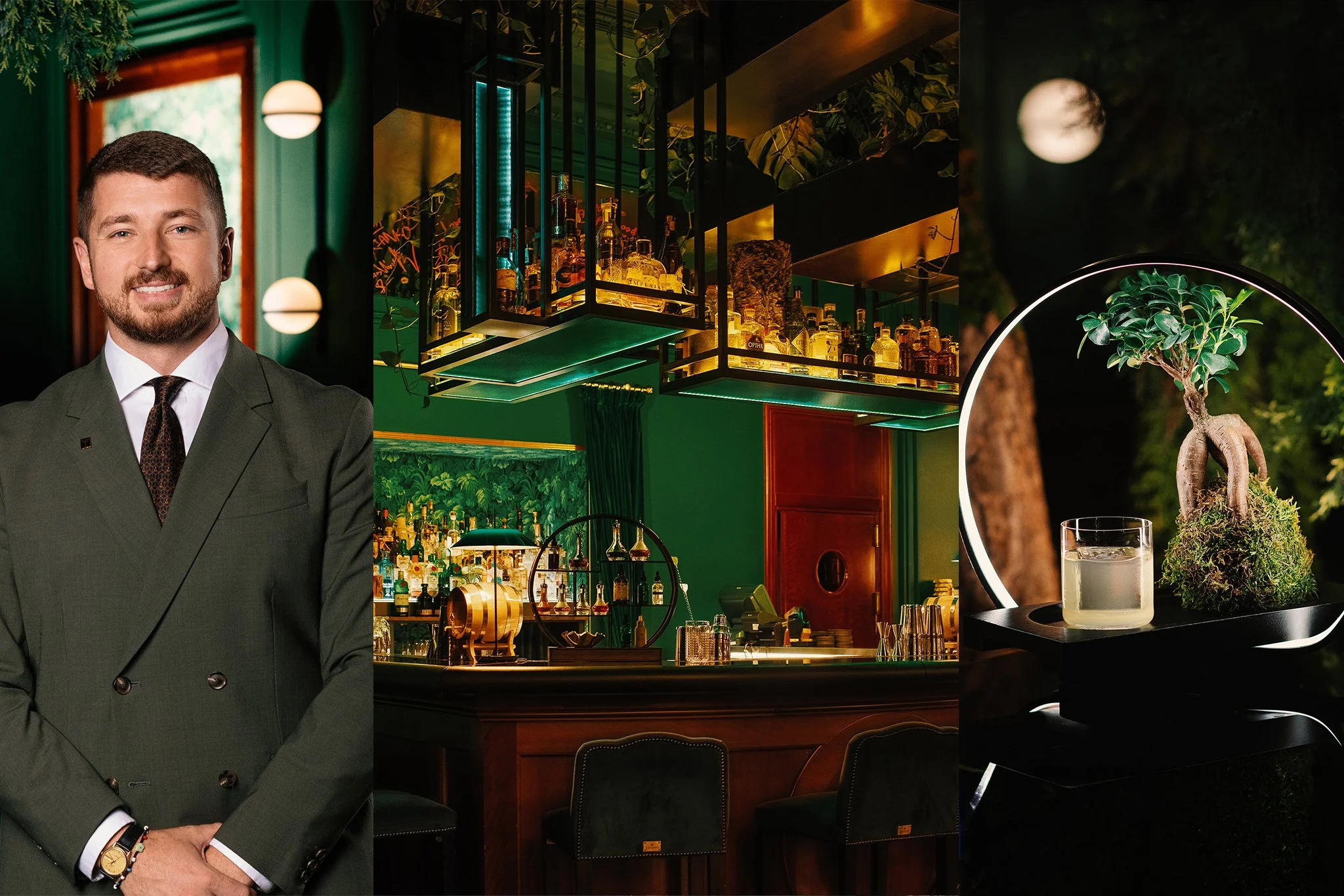
Stanislav | Mirror Bar Bratislava
Located inside the historic Radisson Blu Carlton Hotel in Bratislava, Mirror Bar has evolved from a local architectural gem into an absolute global phenomenon. Behind this meteoric rise is a powerhouse team: Bar Manager and creative mastermind Peter Marcina, who designed the bar's groundbreaking concept, and Global Bar Ambassador and chief of cocktail program Stanislav Harciník, the driving force who acts as the international face of the brand. Together, they have propelled Mirror Bar to the highest peaks of the industry, climbing to an incredible No. 25 on The World’s 50 Best Bars, and securing the prestigious Michter’s Art of Hospitality Award as a part of Europe’s 50 Best Bars 2026.
While the rest of the world has leaned heavily into strict minimalism and clear, clarified liquids, Mirror Bar has boldly championed the art of high-concept maximalism. Their drinks are deeply theatrical, intensely visual, and serve as love letters to nature and design. Beyond the physical bar, Stanislav uses his global ambassador role to host masterclasses and co-organize Hospitality Expo, actively flying in the world's best bartenders to network, collaborate, and share knowledge right in the heart of Central Europe.
Mirror Bar has truly become a phenomenon—climbing from the 50 Best Discovery list all the way to No. 25 on The World’s 50 Best Bars. Does an accolade of this scale act as fuel to push you even further forward, or does it bring a heavy weight of pressure and anxiety to maintain that flawless standard every single night?
Stan: ???
In a global bar scene currently dominated by strict minimalism and clear, clarified cocktails, Mirror Bar has boldly taken the opposite route. Your drinks are highly visual, theatrical, and deeply attentive to physical detail. Why did you choose to run against the grain of this massive industry trend?
Stan: ???
You recently scooped up the Michter’s Art of Hospitality Award from Europe's 50 Best Bars, while the Bartenders’ Choice Awards crowned you for Best Cocktail Menu. When looking at what drives a bar's ultimate success, what carries more weight: the technical brilliance of the liquid on the menu, or the emotional impact of how a guest is made to feel? How do you strike that perfect balance?
Stan: ???
As a co-organizer of the Hospitality Expo in Bratislava, you’ve successfully brought a huge contingent of the global bar elite to Slovakia. Beyond the initial excitement of the event, how has this impacted your bar and the wider region long-term? Have you noticed a tangible shift in how outsiders perceive Slovakia now—perhaps seeing it as a legitimate global hub for industry networking and world-class service?
Stan: ???
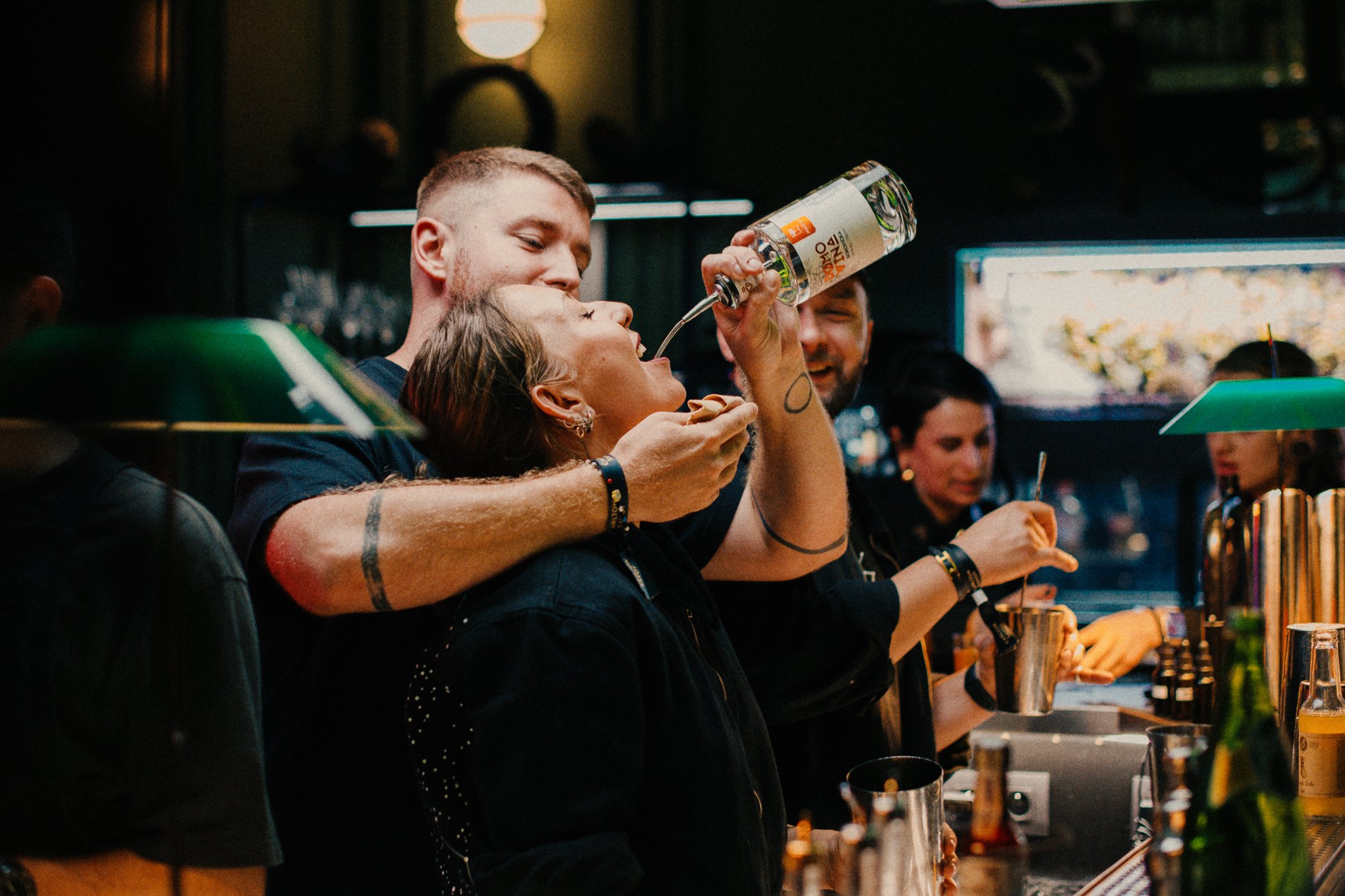
The Regional Outlook: Three Shared Questions on the Future of Central Europe
While TAG, Alma, and Mirror Bar each possess a unique identity, they share a collective mission: redefining how the rest of the world perceives Central European hospitality. To close out our conversations, we put the exact same three core questions to Alicja, Maciej, Pavel, and Stanislav. Their shared perspectives offer a fascinating blueprint for the region's future, the power of cross-border collaboration, and the long-term impact of Europe's new standalone platform.
Central Europe has a rich history of 'sister city' partnerships. Do you think creating a similar network of cross-border 'sister bars' within our region could help elevate and support the local hospitality craft?
Alicja | TAG.: Absolutely. A network of “sister bars” could create valuable opportunities in terms of exchanging knowledge, guest shifts and collaborative events across borders. I’m sure that it would help both emerging and established venues learn from each other and build stronger relationships. We can already notice that the Central Europe is perceived as connected and dynamic cocktail region, which is way more than a collection of individual markets. When bars support each another across borders, the entire scene becomes stronger, more resilient, and more attractive to both guests and industry professionals.
Pavel | Alma: I absolutely believe that building a unified network or a sort of 'union' among bars across our region will have a massive, positive impact. Honestly, I think that collaboration is already happening organically. We are starting to see more cross-border guest shifts, shared knowledge, and genuine mutual support between our cities rather than the old-school mentality of isolation. Our region has a super exciting energy right now, filled with distinct cultural identities and world-class hospitality. It truly deserves the recognition, and there is no doubt it is going to capture a much larger global spotlight in the very near future.
Stan: ???
The launch of Europe’s 50 Best Bars is something the industry has been waiting for for a long time. When you look at the global lists, nearly half of the world's top bars are located right here in Europe. How does it feel to see Europe finally get its own dedicated standalone platform?
Maciej | TAG.: It feels like a natural step forward. Europe has been one of the driving forces behind modern cocktail culture for years and a dedicated platform gives the region the attention and recognition it deserves.
What excites me the most is that this creates room for more stories to be told. Europe is not only London, Barcelona or Paris. There are outstanding bars emerging in cities across Balkan, Central Europe or Scandinavia that also deserve international recognition. A standalone European platform can put a spotlight on destinations that may have previously been overlooked. It also shows Europe's importance on the global stage and gives the region a platform that reflects its scale, creativity, and diversity.
Pavel | Alma: To be completely honest, I think it’s absolutely amazing that this is finally happening. I’ll admit I thought a standalone European list would have arrived much sooner—especially given the sheer density of world-class venues on this continent—but we are incredibly grateful that it's now a reality. Thanks to this dedicated platform, so many more deserving bars across Europe are going to get the spotlight and recognition they have truly earned. Looking ahead, my big hope is that next year brings an extended list to follow the top 50, which will open the doors even wider for the massive wave of talent across the region.
Stan: ???
What are your biggest expectations for this new European list? Do you think it will have a tangible impact on guest foot traffic, local economies, and overall support for the region?
Maciej | TAG.: I believe it can have a real impact. We saw back in 2022 how that can create a momentum. International recognition often attracts new guests, increases tourism interest and creates opportunities not only for bars, but also for hotels, restaurants and different local businesses. My biggest hope is that the list encourages exploration. Europe is full of remarkable cocktail destinations that many travelers have not yet discovered.
Ultimately, I see Europe’s 50 Best Bars not just as a ranking, but as a platform that can help connect communities and accelerate the development of hospitality throughout the region. The potential is significant, and I believe the industry is ready to make the most of it.
Pavel | Alma: What excites me most about this list is that many bars from our region will see that it is possible to get on it, and they are going to be motivated to push more and more. I think we’re going to see names that we expect on this year’s list. And of course, it’s going to bring a lot of traffic to Europe. It will definitely bring more business to our bars, and hopefully, travelers will see that Europe has so much to offer.
Stan: ???

Europe’s 50 Best Bars
Following the success of regional bars lists Asia’s 50 Best Bars and North America’s 50 Best Bars, 50 Best announced the launch of Europe’s 50 Best Bars in 2026. The Europe’s 50 Best Bars list is created by the Europe’s 50 Best Bars Academy, an influential group of more than 300 independent leaders from across the region, each selected for their expert opinion of the regional bar scene. The Europe’s 50 Best Bars event programme – including the awards ceremony and unveiling of the list – provides a unique opportunity to unite bar owners, bartenders, media and experienced travellers at a captivating celebration of hospitality, passion and talent. The resulting list will be the first ranking of its kind to encompass Europe.