Landscape
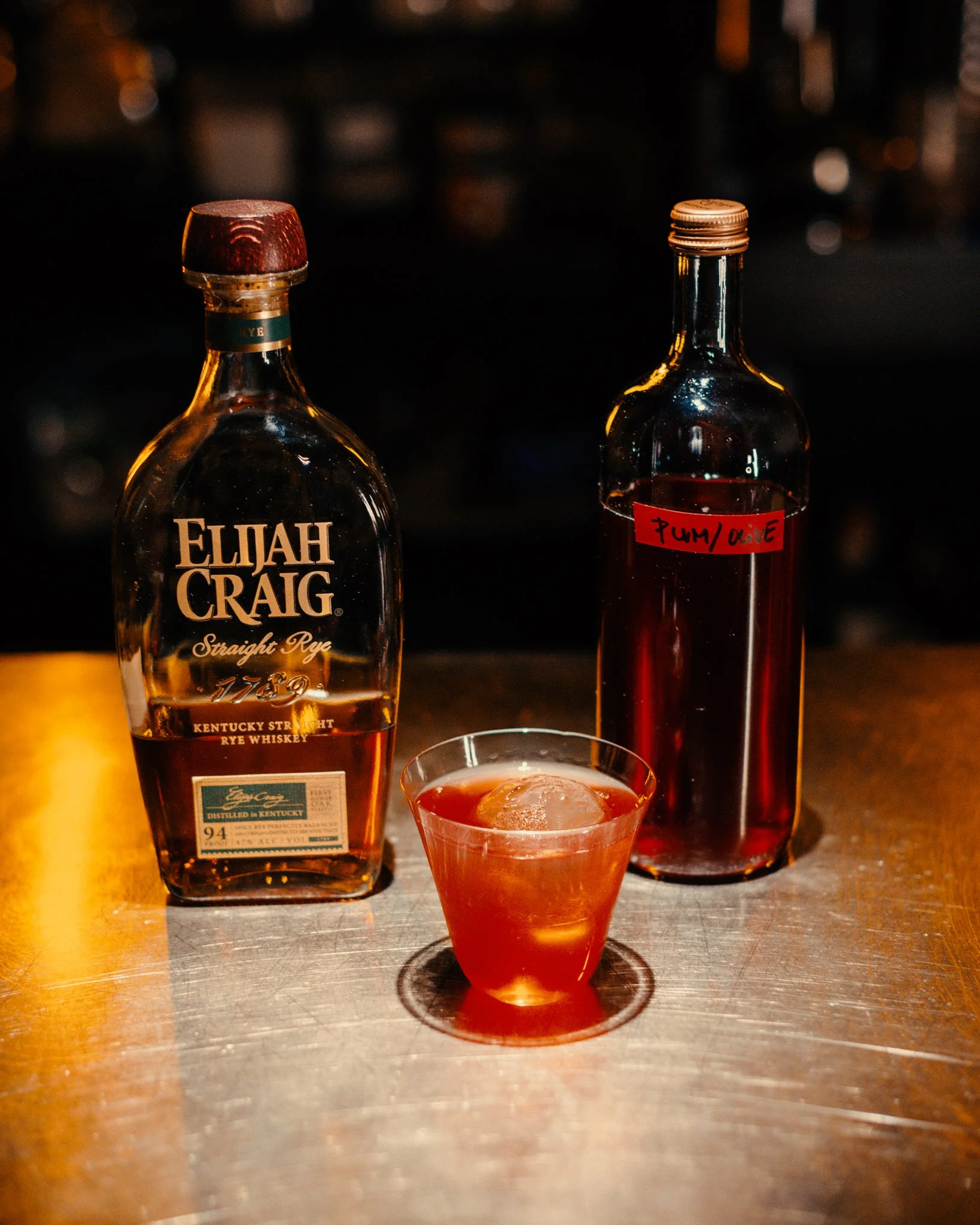
Elijah Craig is one of those brands deeply connected to one of the most important elements in American whiskey history – the new charred oak barrel. It is a story built around fire, wood, time and grain, all of which helped shape the character we now associate with Kentucky bourbon: vanilla, caramel, spice, oak and a gentle roasted note.
The brand carries the name of Reverend Elijah Craig, often referred to as the “Father of Bourbon”. While this title belongs more to the world of bourbon legend than to a fully documented historical fact, it remains an important part of the brand’s identity. It points back to the time when American whiskey was taking shape, and when the charred oak barrel became one of the defining pillars of bourbon as we know it today.
In Landscape, this bourbon foundation is not pushed into a classic sweet sour direction. Instead, the recipe moves towards something drier and more gastronomic. Fino Sherry brings nuttiness, wine-like dryness and elegance, while lemon keeps the drink fresh. The plum and olive component adds fruit depth, gentle salinity and a more complex flavour profile.
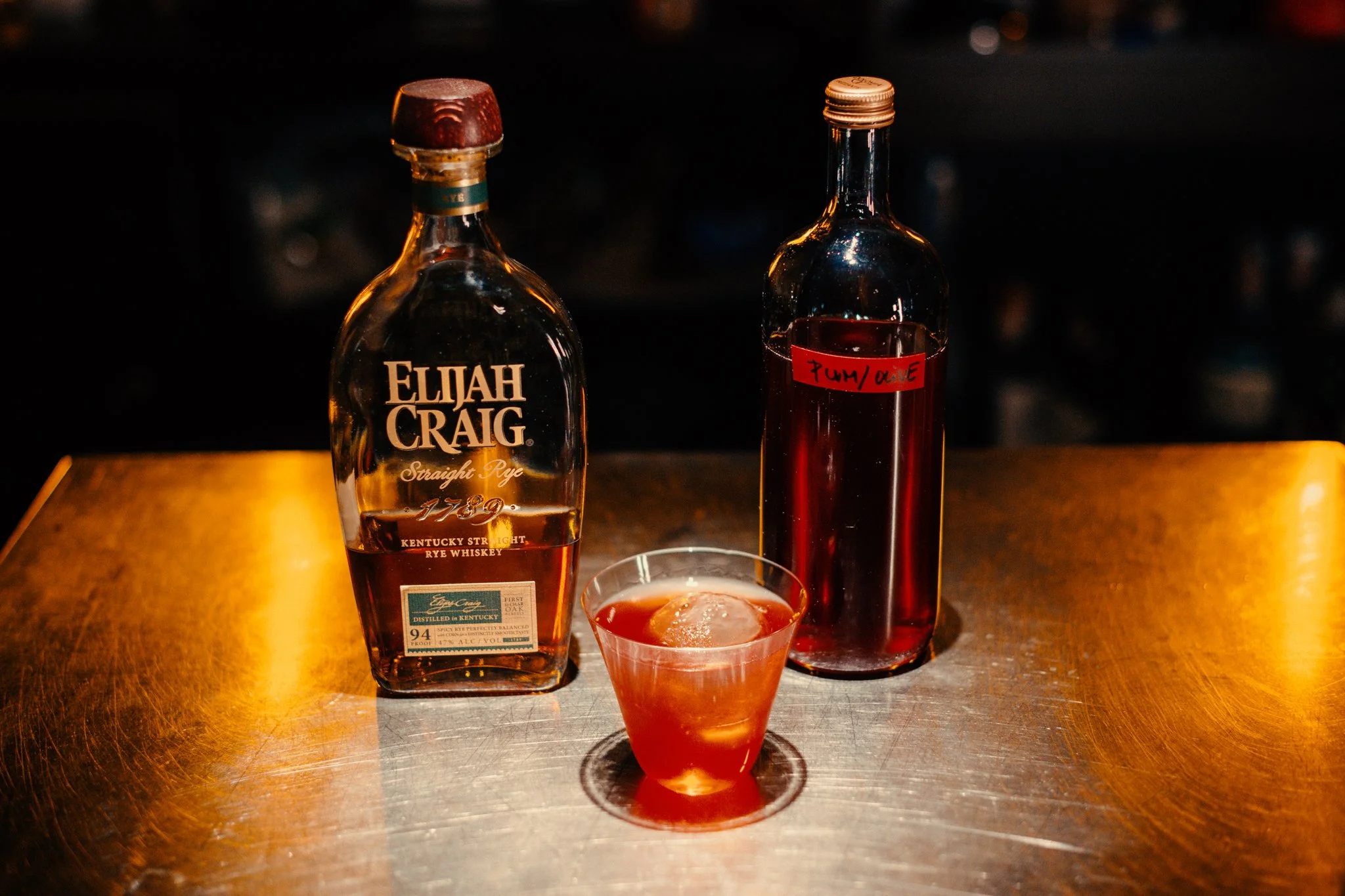
Plum, olive and pectinase
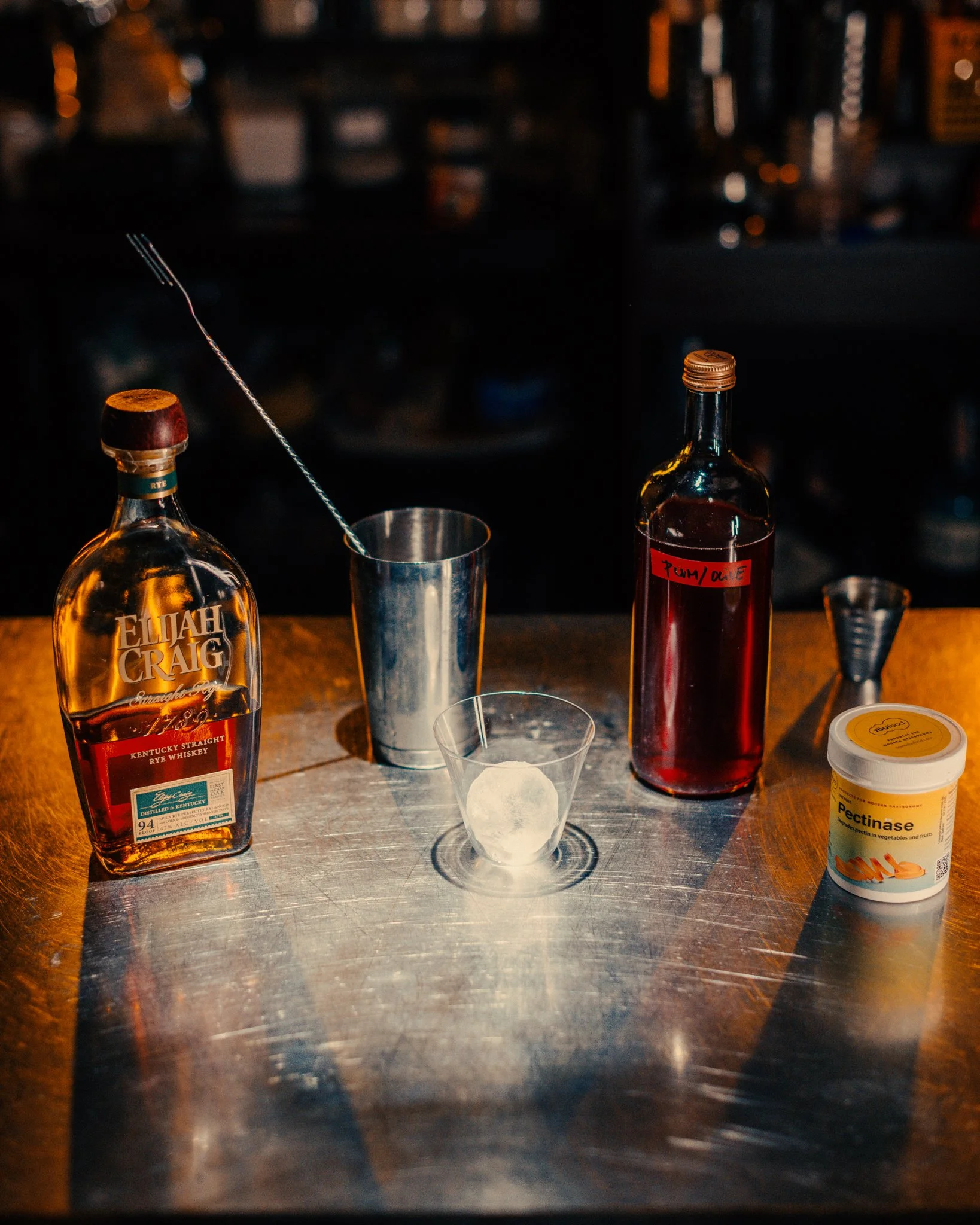
Plum purée is a beautiful ingredient behind the bar, but technically it can be quite challenging. It has a thicker texture, contains pectin and, when used in cocktails, can easily make the final drink feel heavier or cloudier than intended. This is where pectinäse comes in – a pectinase enzyme that helps break down the pectin structure in fruit.
The result is a more liquid, easier-to-filter and visually cleaner component. The flavour of plum remains present, but instead of a dense purée, we get a more elegant base that can be balanced with sugar and used as a syrup or cordial.
In this recipe, plum is combined with olive water. This does not bring only salinity, but also a subtle vegetal depth that naturally connects the bourbon with fino sherry. The result is not just a fruit syrup, but a drier, savoury and more complex element with a gastronomic character.
Landscape
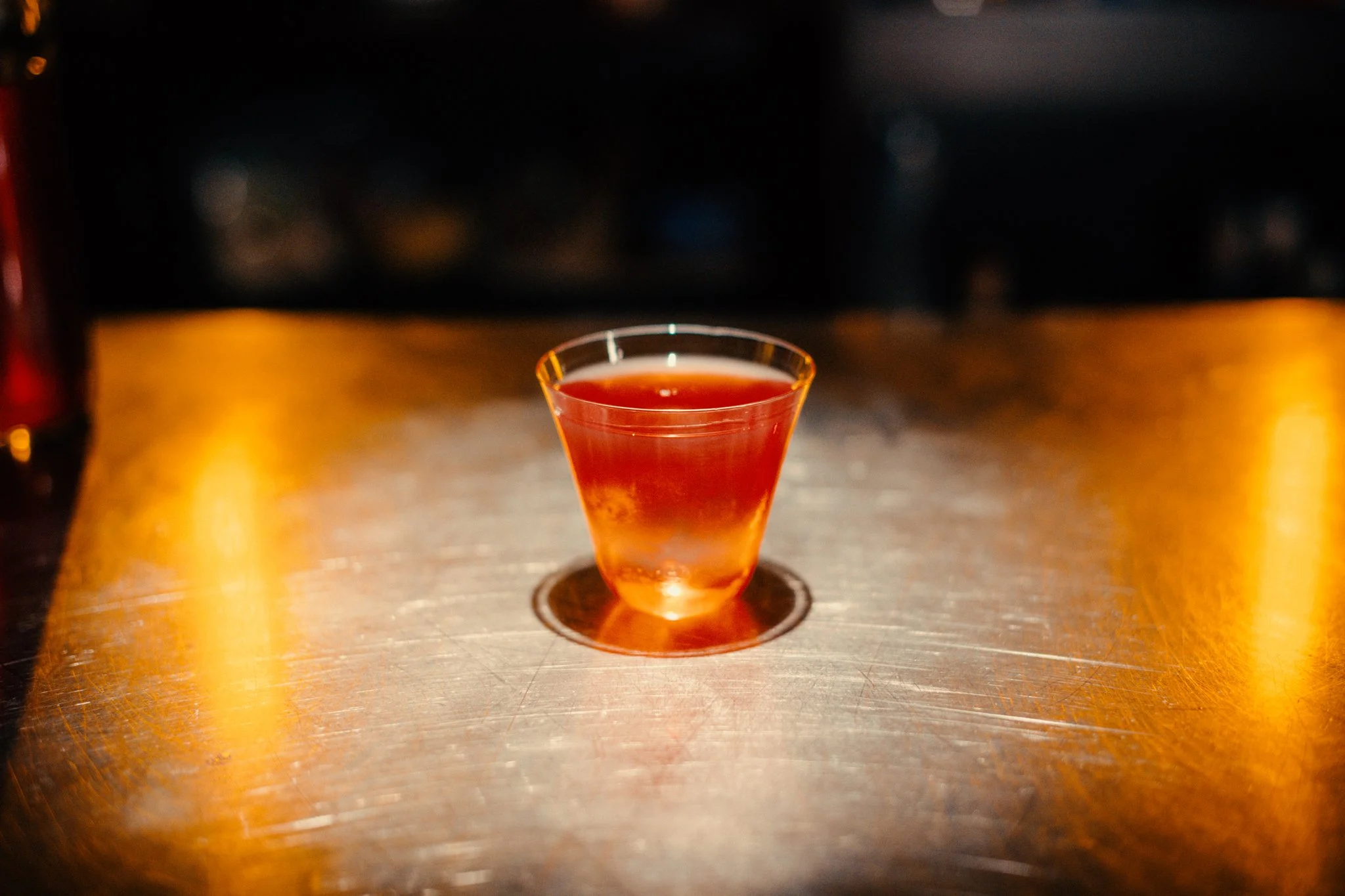
Recipe:
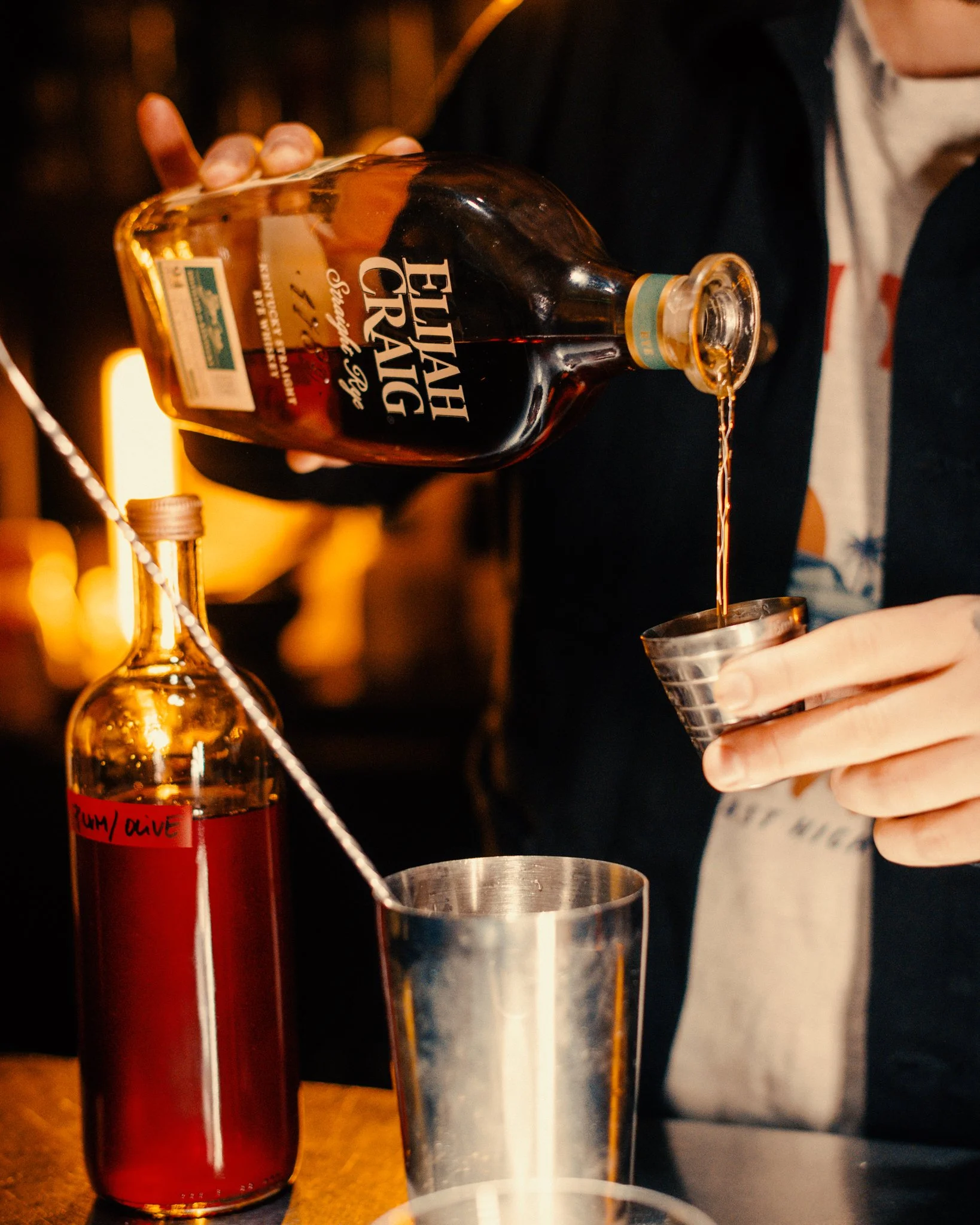
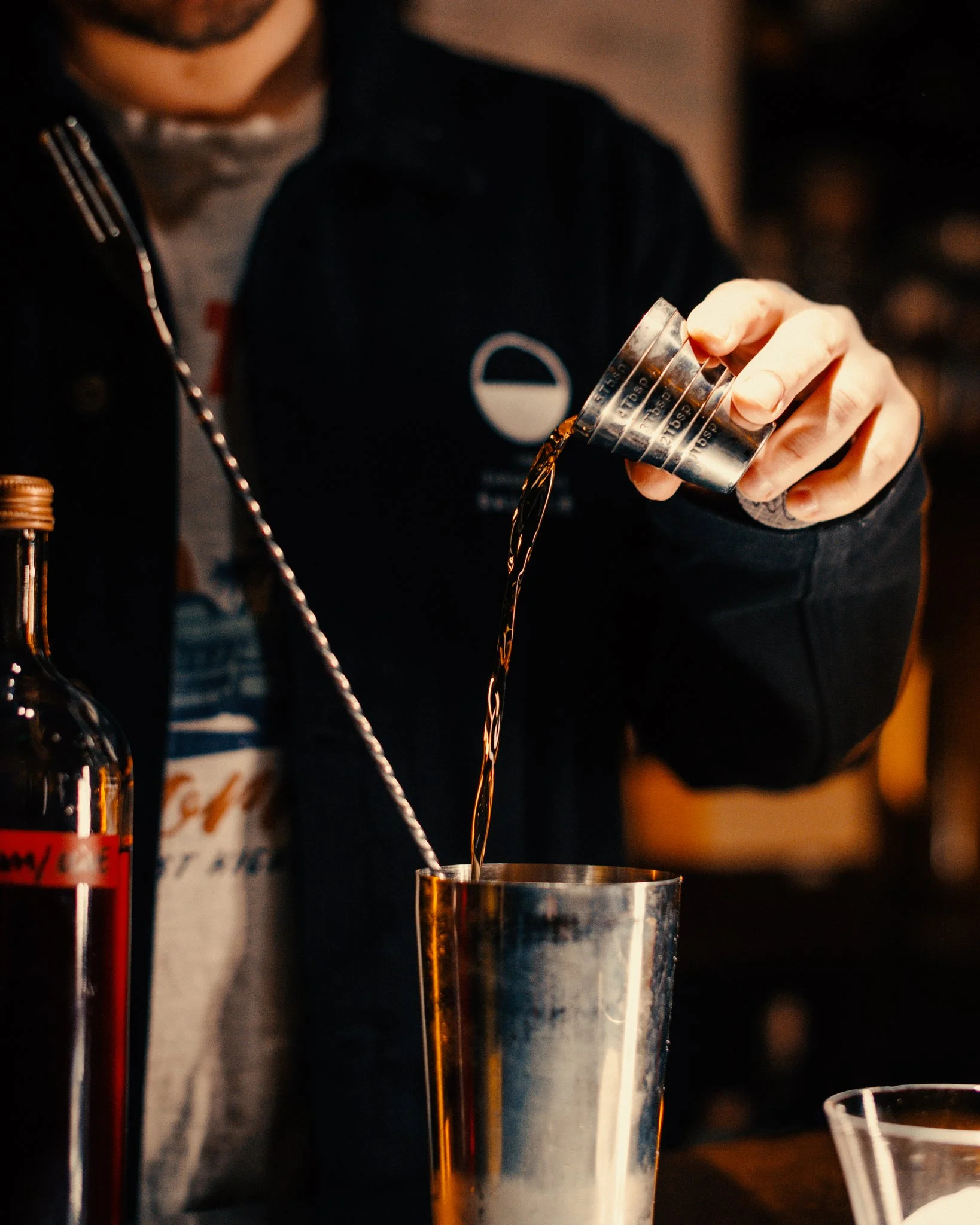
40 ml Elijah Craig Bourbon
40 ml Fino Sherry
15 ml lemon juice
15 ml Plum & Olive cordial
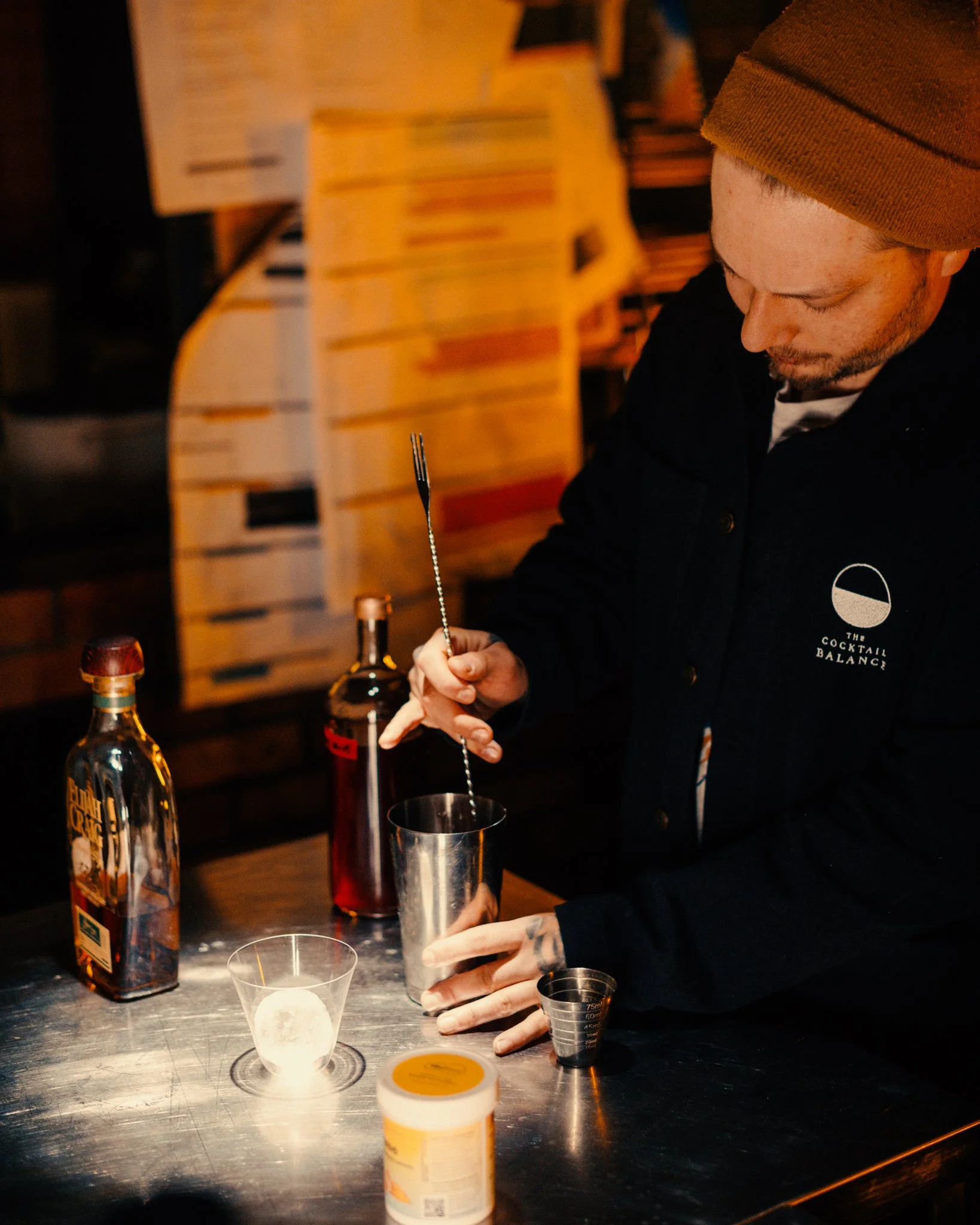
Technique: Stir or Shake
Serve: Old Fashioned glass
Plum & Olive cordial
Ingredients:
10–12 g pectinäse / pectinase
1 pack plum purée
100 g olive water
10 g malic acid
10 g citric acid
5 g ascorbic acid
Method:
Mix the plum purée with olive water and pectinäse. You can use an immersion blender to incorporate the enzyme more evenly.
Pour the mixture into a vacuum bag and seal.
There are two possible ways to process it.
Room temperature method:
Leave the mixture to work at room temperature for approximately 6–12 hours. Room temperature supports enzyme activity and helps break down the pectin structure of the purée.
Sous-vide method:
Place the sealed vacuum bag into a water bath set to 45 °C. Hold for 3–6 hours. Afterwards, remove the bag and chill it quickly in an ice bath.
After the enzymatic process, strain the mixture through a fine cloth or a double layer of filtering cloth. For a cleaner result, you can filter the liquid more than once. Let it drip through for a few minutes first, then pass the cloudier part through the same filter again.
Measure the Brix of the resulting juice and add sugar until you reach approximately 50 Brix, close to a 1:1 syrup ratio. Once balanced with sugar, add malic acid, citric acid and ascorbic acid. Mix well, bottle and label.
Technique as a tool, not a decoration
When working with enzymes, it is important that the technique does not overshadow the drink itself. pectinäse is not used here as a flashy detail in the recipe, but as a practical tool. It helps create a more stable, cleaner and easier-to-use plum component that would be much harder to prepare through standard blending and filtration alone.
For the bar, this means better consistency, a cleaner visual result and a component that can be prepared in advance. For the guest, it means a drink that feels simple and refined, even though there is thoughtful technical work behind it.
Landscape connects bourbon history, the dryness of sherry, the fruit depth of plum and modern enzymatic technique.